GROUNDED SOLUTION - NOVEMBER 2024
Indianapolis, USA
Overview
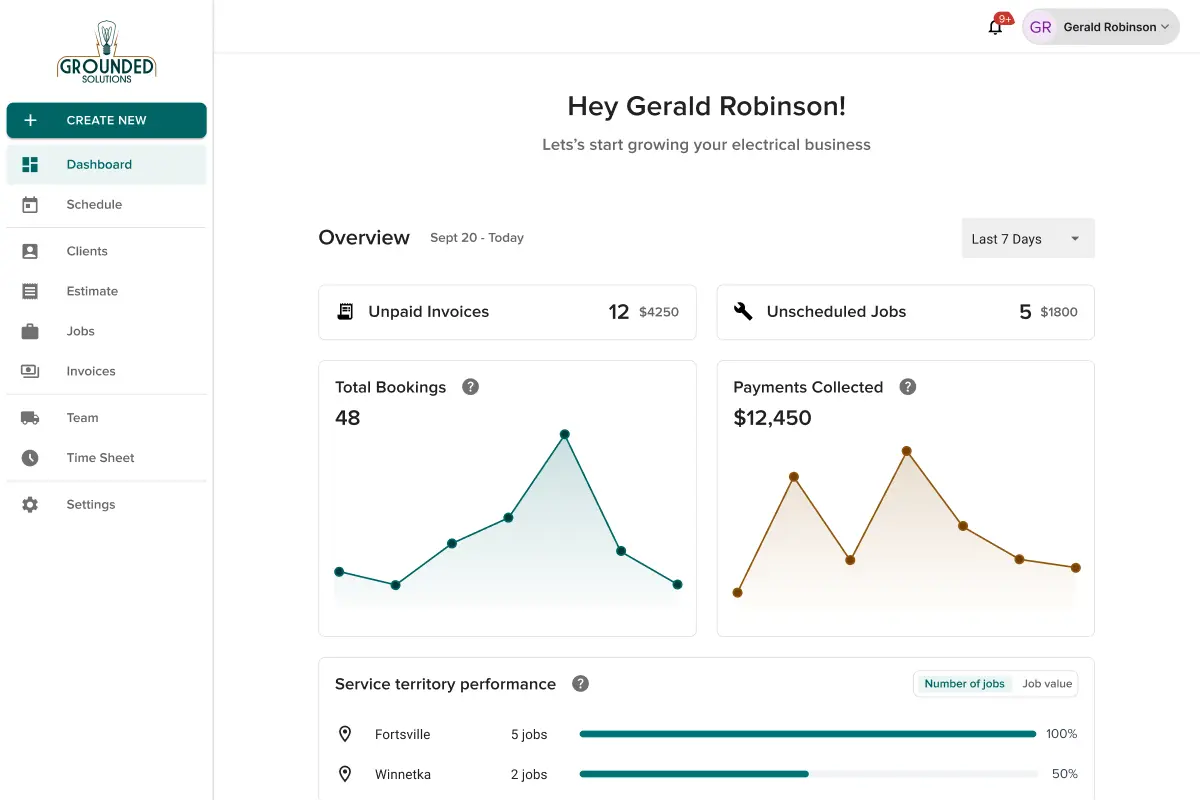
Grounded Solution is a full-service electrical contractor based in Indianapolis, serving residential and commercial clients across the Midwest since 2001. They handle everything from simple repairs to complex industrial installations, managing multiple crews, varied job types, and extensive client relationships.
They approached us needing a modern field service management system. Their existing software created more problems than it solved—confusing workflows, limited scalability, and disconnected data structures that prevented growth from residential work to large commercial contracts.
Timeline:
1.5 months
Platform:
Web App
Project Goals
01
Design for residential simplicity that scales to enterprise complexity without overwhelming small operators.
02
Simplify data-heavy workflows while providing visibility across locations, teams, and job statuses.
Discovery
From broken structure to systematic solutions
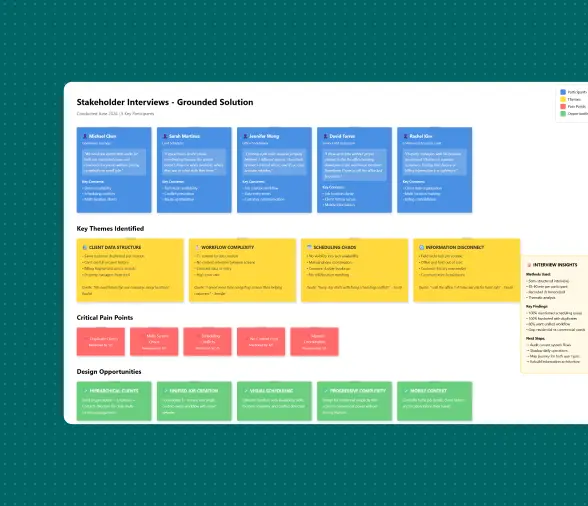
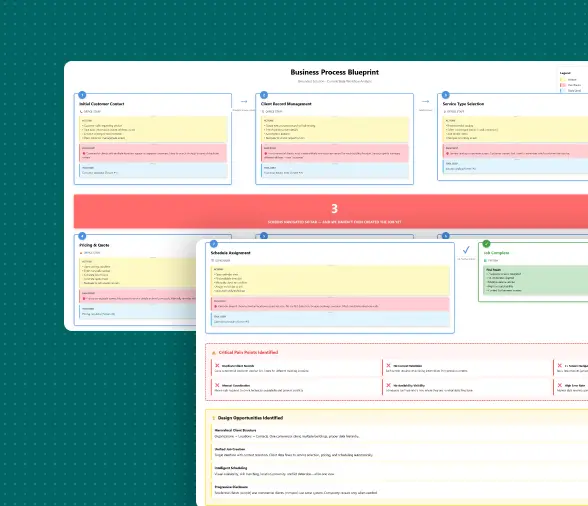
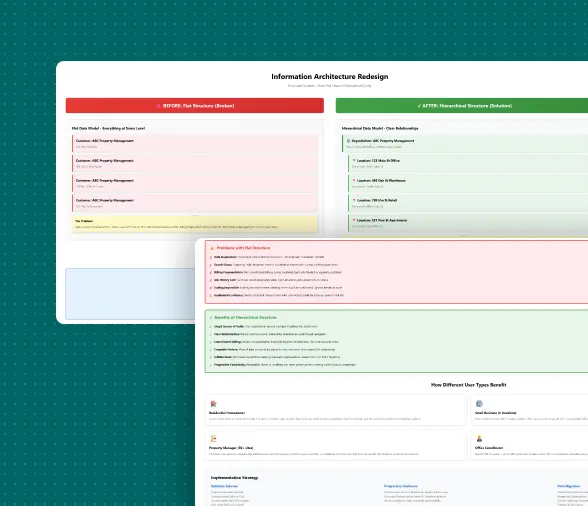
Understanding that surface-level UI improvements wouldn't solve fundamental architecture problems, I started by rebuilding the information structure. Quick sketches helped visualize how a hierarchical system (Organizations → Locations → Clients → Jobs) could serve both residential and commercial needs without forcing complexity on small operators.
Rather than building from scratch under tight timelines, I leveraged Material Design's comprehensive component library. Data tables, bottom sheets, FABs, and cards provided robust foundations for field service workflows. I customized Material's elevation system and interaction patterns to create clear hierarchy in data-heavy interfaces. This approach let me focus on solving field service-specific problems instead of reinventing basic components.
Designing
From broken structure to systematic solutions
Understanding that surface-level UI improvements wouldn't solve fundamental architecture problems, I started by rebuilding the information structure. Quick sketches helped visualize how a hierarchical system (Organizations → Locations → Clients → Jobs) could serve both residential and commercial needs without forcing complexity on small operators.
Rather than building from scratch under tight timelines, I leveraged Material Design's comprehensive component library. Data tables, bottom sheets, FABs, and cards provided robust foundations for field service workflows. I customized Material's elevation system and interaction patterns to create clear hierarchy in data-heavy interfaces. This approach let me focus on solving field service-specific problems instead of reinventing basic components.
Rebuilding field service operations
Three features designed to eliminate the core problems
Streamlined Job Creation
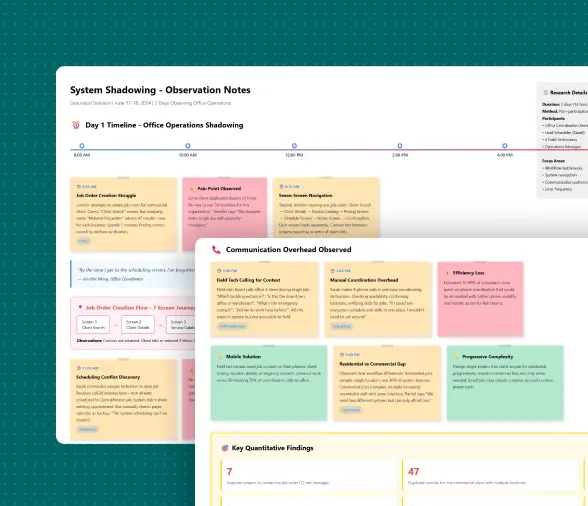
The job creation workflow consolidates 7+ disconnected screens into a single, context-aware interface. Select client, location, and service type—relevant fields appear automatically. Service catalog integrates pricing. Scheduling shows available technicians with required skills.
The system understands job context: selecting "Commercial Panel Upgrade" loads commercial pricing, suggests certified electricians, and estimates duration based on historical data. "Residential Outlet Installation" shows different pricing, suggests available residential technicians, and adjusts time estimates accordingly.
Result: Job orders created in minutes instead of navigating multiple screens. Context retention prevents errors. Office staff focus on customer service instead of fighting the interface. New employees onboard faster with guided workflows.
Unified Client & Location System
The hierarchical client system solves duplicate data through clear organization: Organizations → Locations → Contacts. A property management company exists once as an Organization with multiple Locations (office buildings, apartment complexes, retail centers) and associated Contacts at each site.
When scheduling a job, select the Organization, then the specific Location. All history, notes, and billing details connect properly. Residential clients (single location) use the same system without added complexity—they simply have one location. Commercial accounts unlock multi-location views automatically.
Result: Property managers with 50+ sites appear once in the system with proper location hierarchy. Office staff find client information instantly. Billing consolidated correctly. Data duplication eliminated.
Intelligent Scheduling
The scheduling system intelligently matches technicians to jobs using required skills, real-time availability, and automated conflict detection. Coordinators define crew size and skill requirements first, and the system immediately filters and prioritizes eligible technicians.
Technicians are grouped by availability — available, partially available, or unavailable — with clear visual time windows for each shift. Skill gaps are flagged instantly, and scheduling conflicts surface before assignments are confirmed, preventing double bookings and incorrect crew selection.
Result:
Scheduling conflicts reduced by 75%. Coordinators eliminated daily phone tag with technicians. Assignment decisions became faster and more accurate. Customers receive reliable arrival windows backed by real-time availability.
Impact
From fragmented to unified. From chaos to coordination.
Faster job order creation
Reduction in scheduling conflicts
Improved first-time fix rate
Operational Efficiency
Office coordinators create job orders in minutes instead of navigating 7+ disconnected screens. Context flows seamlessly from client selection through service catalog to technician assignment. Staff report spending less time fighting the interface and more time serving customers.
Scheduling Confidence
Schedulers assign technicians knowing the system prevents conflicts and optimizes routes automatically. Visual calendar shows availability, skills, and location proximity at a glance. Daily phone coordination eliminated—technicians receive accurate schedules with proper job context.
Commercial Growth Enabled
The hierarchical client structure enabled pursuit of larger commercial contracts previously unmanageable. Property management companies with dozens of locations became organized accounts instead of data nightmares. Residential simplicity maintained while unlocking enterprise capabilities.
"The new system finally matches how we actually work. Our schedulers can see everything they need in one view, and creating jobs doesn't require jumping through seven different screens anymore. We've taken on commercial clients we couldn't have managed before."
Michael Chen
Operations Manager
Grounded Solution