LIGHTHOUSE CABINETRY - AUGUST 2024
Lindsay, CANADA
Overview
Lighthouse Cabinetry is a custom cabinet manufacturer based in North America, specializing in high-end residential and commercial projects. They create bespoke solutions for kitchens, bathrooms, and bedrooms, managing everything from initial client consultation through design, fabrication, and installation.
They approached us with a need to modernize their operations infrastructure. Their entire workflow—customer orders, production scheduling, multi-department coordination—ran on Excel spreadsheets that had served them well for years but couldn't scale with their growth.
Timeline:
3 months (Phase 1)
Platform:
ios
Web App
Project Goals
01
Replace Excel with reliable digital infrastructure that scales with business growth.
02
Build a system that adapts to varying customization needs across different project types.
Discovery
Understanding operations through multiple lenses
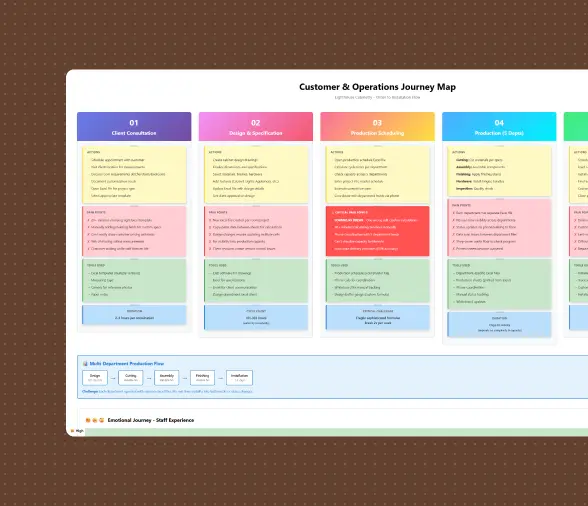
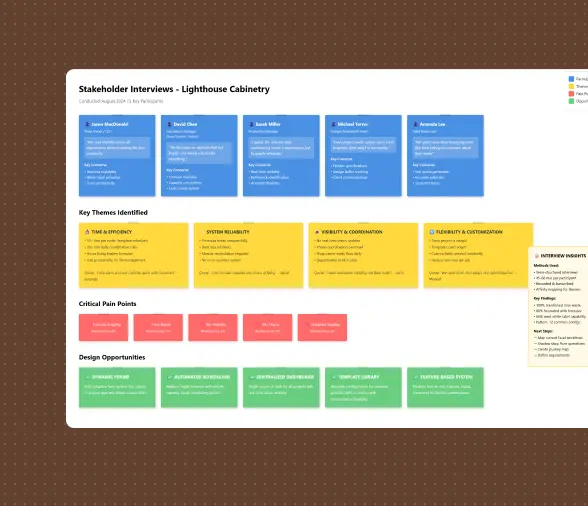
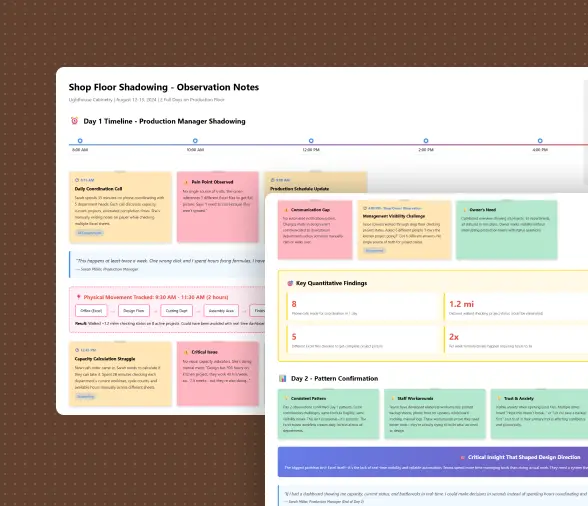
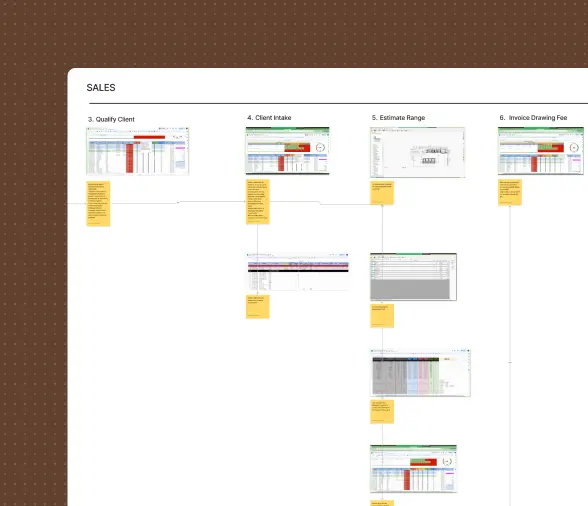
To bridge the gap between fragile spreadsheets and scalable software, I conducted contextual inquiries on the shop floor and performed heuristic evaluation of their existing Excel workflows. I shadowed production managers for two weeks, watching orders flow from intake through five departments.
I discovered that the primary failure point wasn't the data itself, but the lack of real-time visibility across departments and the manual coordination required to calculate realistic timelines. Excel couldn't mirror how manufacturing actually works—departments with different capacities, custom specifications that vary wildly, and the need for instant status visibility.
Designing
From research insights to systematic solutions
Based on the discovered pain points, I began with quick sketching and wireframing for complex workflows where I needed to think through interaction patterns. For key screens like the production scheduler and order intake forms, rough sketches helped visualize how departments would coordinate and how dynamic forms could adapt to different room types.
Rather than building a design system from scratch under tight timelines, I leveraged Untitled UI's comprehensive component library. This gave us robust foundations—forms, tables, dashboards, navigation patterns—already built and tested. I customized the color tokens, typography, and spacing to match manufacturing workflow needs, focusing on clear data hierarchies, scannable layouts, and terminology familiar to cabinet makers. This approach allowed me to spend time solving manufacturing-specific problems instead of rebuilding basic components.
Introducing the new operations platform
Three key features designed to solve the core problems
Configurable Form System
The configurable form system uses a three-layer architecture: Custom Fields (Job ID, Room Name, Date), Feature Sets (Cabinet, Hardware, Lighting, Sink & CT with their specific fields), and Templates (pre-configured combinations like "Standard Kitchen" = Cabinet + Hardware + Lighting).
Sales selects a template, and the form instantly loads with relevant features. Need something unique? Add or remove features on the fly. The system adapts to every project without manual field management, letting sales focus on customers instead of file formatting.
Result: Consultation time focused on customer needs. Staff report feeling more confident during conversations because form customization happens in seconds.



Automated Production Scheduler
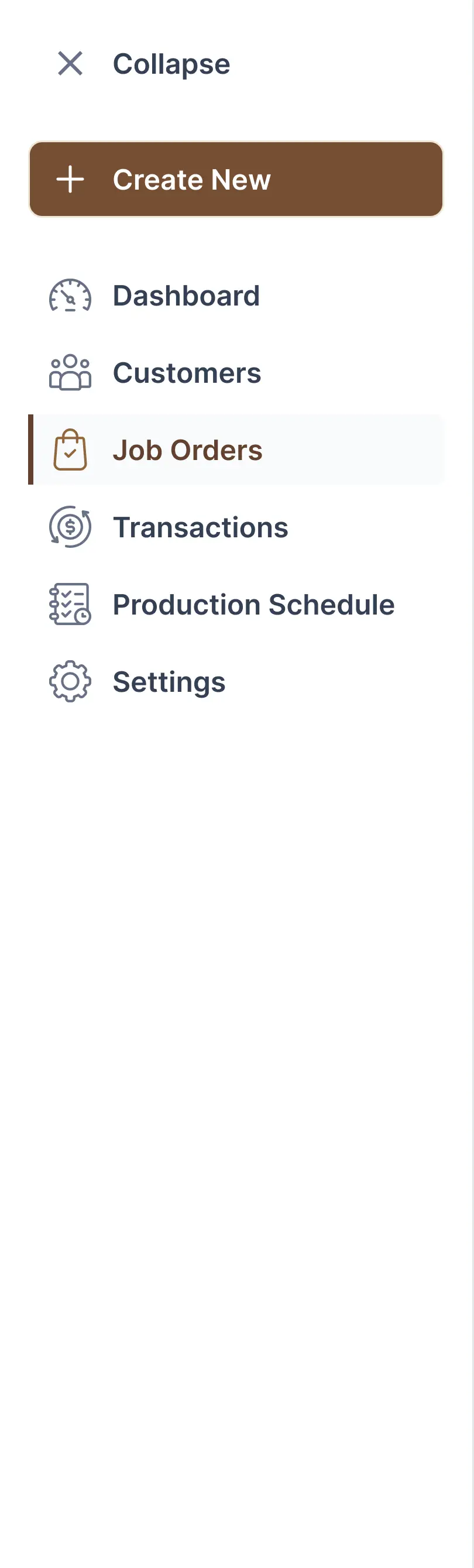
The production scheduler replaces Excel's fragile formulas with reliable automated calculations. Each project shows: Unique ID, Project Name, Price, Full Cycle, Remaining Cycle, Current Department, Days to Completion, and Finishing Date.
The breakthrough: When production managers drag a project up or down in the queue, the system instantly recalculates Remaining Cycle, Days to Completion, and Finishing Date for all affected projects. What took 30+ minutes of manual coordination now happens automatically in real-time.
Result: Orders delivered on expected dates consistently. Production managers eliminated daily coordination phone calls. No more broken formulas. Staff trust the system's transparent, reliable calculations.
Linear Task Management
The task management system mirrors production flow: Design → Cutting → Assembly → Finishing → Installation. When Design completes tasks, they push to Cutting. Cutting immediately sees current specifications—no outdated sheets, no phone calls, no multiple Excel files. The process continues linearly through all departments.
All 30+ concurrent orders live in one system with real-time updates. Design changes flow automatically to production. Teams work from a single source of truth instead of separate Excel files per project.
Result: Complete operational visibility. Design changes sync instantly across departments. Data synchronization issues eliminated. Projects move smoothly through linear workflow without coordination overhead.
Impact
Reliable operations. Confident teams. Delivered promises.
On-time delivery rate
Reduction in coordination time
Concurrent projects managed
Operational Visibility
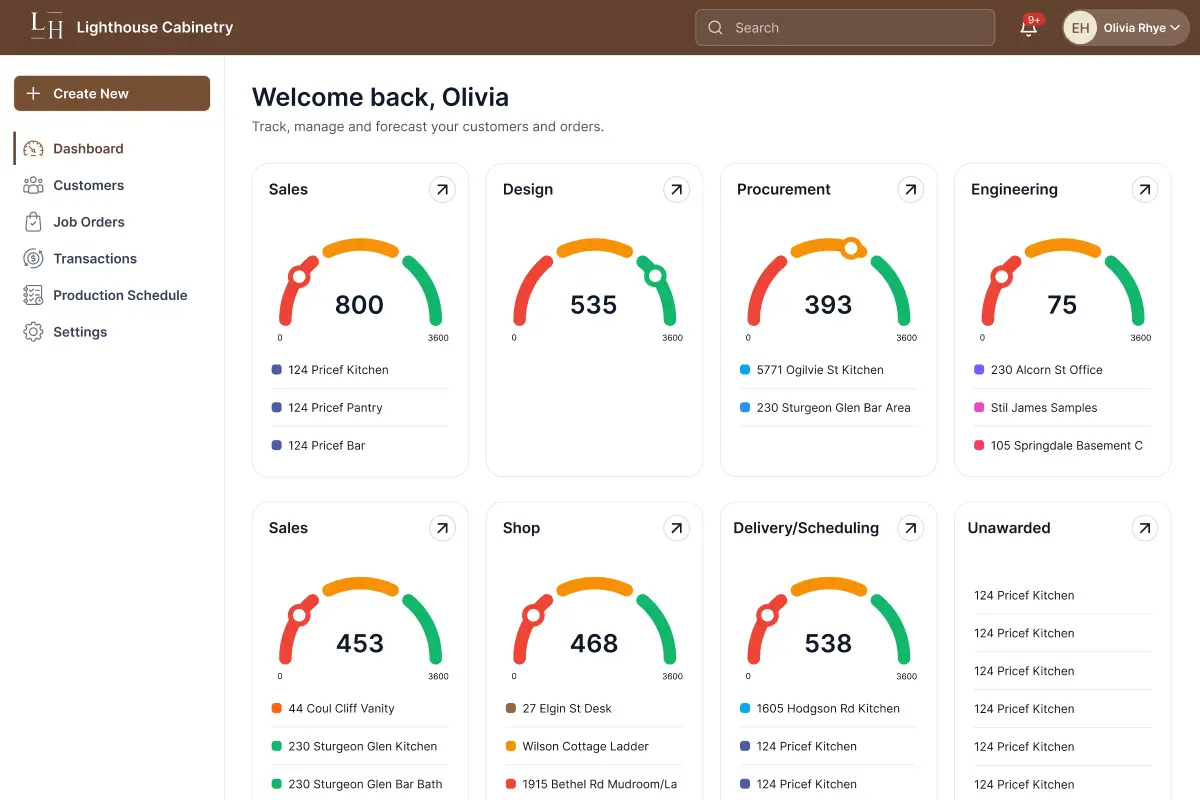
The shop owner now has dashboard overview of all departments—no more walking the floor to check status. Teams know what other departments are doing without phone calls or checking multiple files.
Reduced Cognitive Load
Sales teams focus on customer needs and accurate time estimates instead of managing Excel files. Staff report feeling more confident during consultations, asking better questions about customer requirements rather than worrying about file creation.
Predictable Delivery
Orders are consistently delivered on expected due dates. Production managers trust the system's calculations, eliminating the anxiety of broken formulas and manual recalculation.
"The new system transformed how we work. My sales team is more engaged with customers during consultations, and I finally have clear visibility into what's happening across all departments. We're delivering on our promises consistently."
Jason MacDonald
CEO
Lighthouse Cabinetry